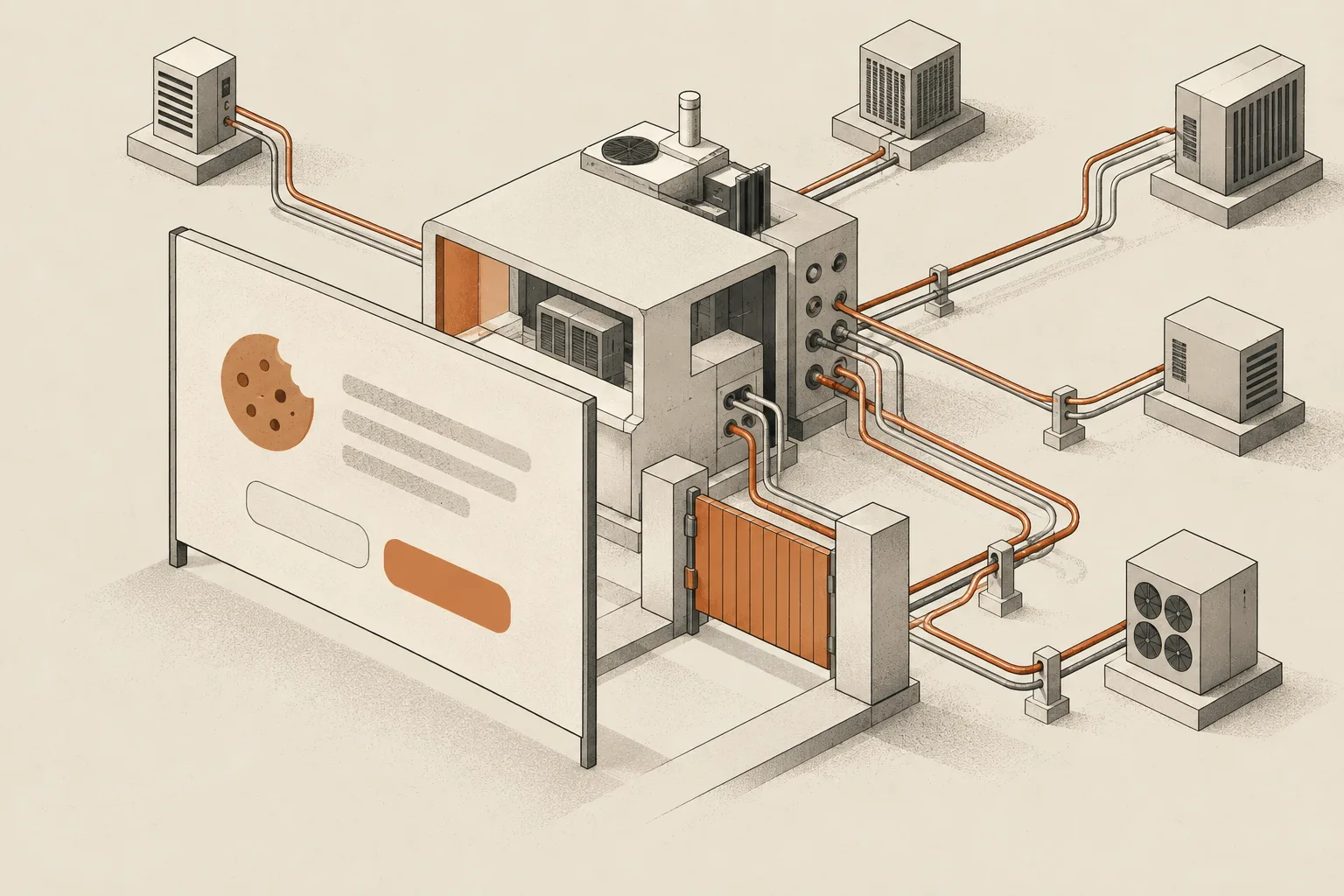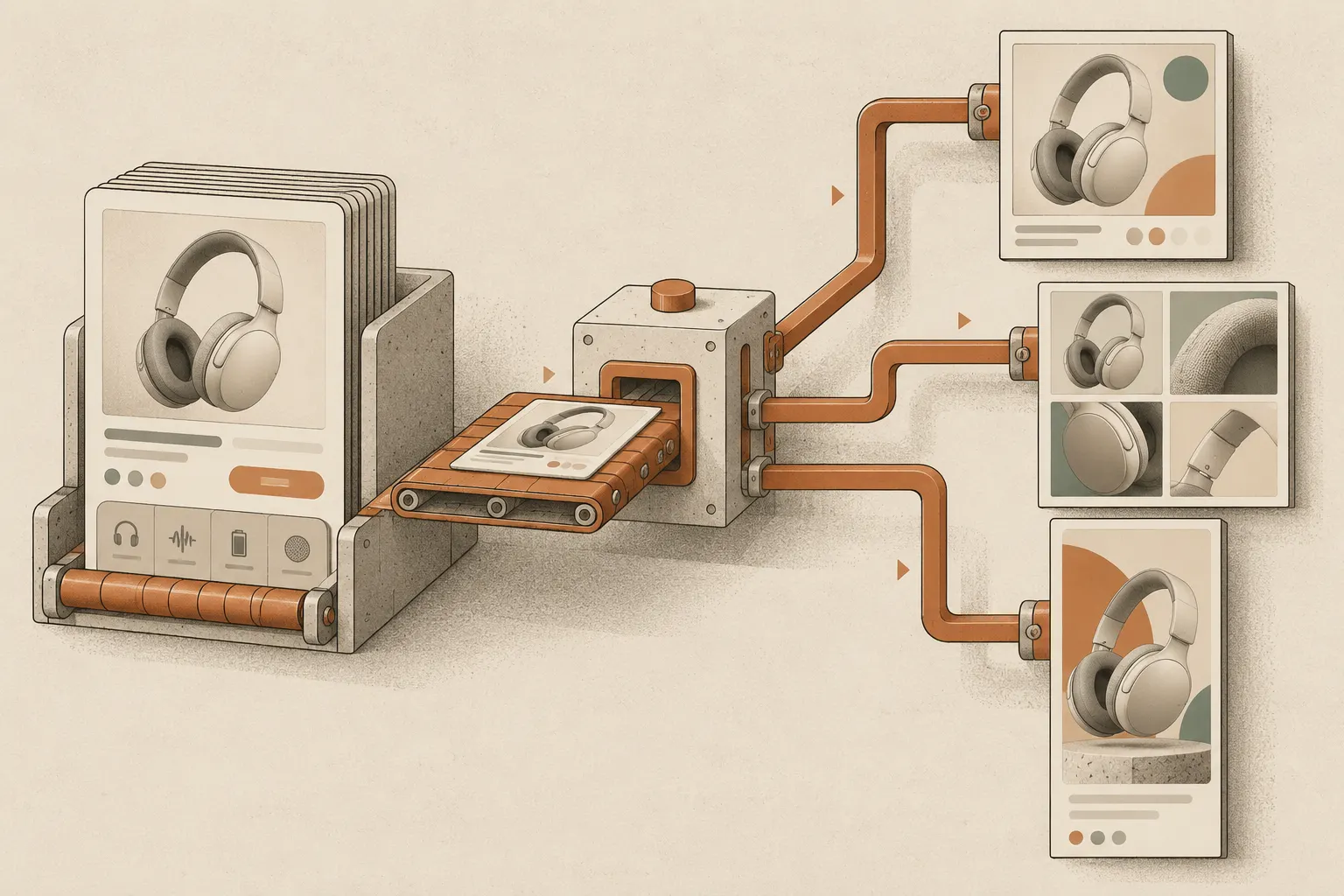
In 2026, traditional manual copywriting for B2B websites has largely been replaced by programmatic systems. However, 95% of companies attempting AI content generation with basic ChatGPT wrappers face severe drawbacks: search penalties, broken frontend layouts, fabricated code parameters, and zero visibility in AI answer engines (Perplexity, Claude, ChatGPT Search).
The failure lies not in the models, but in the lack of an engineering pipeline. When LLMs generate content without strict architectural constraints, they produce repetitive clichés, broken ASCII diagrams that destroy Markdown parsers, invisible Unicode watermarks, and fictional API endpoints.
We engineered the Autonomous GEO Engine: a 5-phase pipeline that scraped 378 real Google queries, structured 7 dense topic clusters (47 comprehensive articles), and deployed an authority hub with zero hallucinations and complete build integrity.
Executive Summary
- Why scraping Google Suggest and People Also Ask trees directly outperforms paid SEO databases with 3-6 month data latency.
- The “1 Pillar + 2 Satellites” clustering blueprint and why spreading publication dates prevents search crawler red flags.
- 4 strict Standard Operating Procedures (SOP): replacing crude ASCII with responsive HTML cards, zero data leakage, and single currency consistency.
- Automated pre-deployment sanitization to strip invisible Unicode watermarks (Zero-Width characters) and robotic syntax.
- Generative Engine Optimization (GEO) infrastructure: BLUF formatting, structured
/llms.txtcatalogs, and dynamic tag-based interlinking.
1. Zero-Cost Search Demand Harvesting ($0 API Waste)
Instead of relying on expensive third-party databases, we deployed a Python harvester that queries Google Autocomplete API and People Also Ask (PAA) trees directly.
By combining seed terms with operational modifiers (how to, cost of, vs, best way to) and alphabet permutations (a-z), the system extracted 378 verified long-tail queries in under 4 minutes with €0 API cost.
Every published guide targets an active, high-intent question asked by real founders and engineers this month.
2. The “1+2” Cluster Architecture & Publishing Rhythm
Dumping dozens of articles on a domain in a single day triggers search engine spam filters. We organized our harvested queries into 7 commercial topic clusters:
- Pillar Hub (Comprehensive Guide): Broad, high-intent architectural overview (e.g. Automating WhatsApp CRM with n8n).
- Satellite A (Technical Deep Dive): Specific implementation guide (e.g. Transcribing WhatsApp Voice Memos in n8n).
- Satellite B (Tradeoff & Comparison): Protocol or tooling comparison (e.g. WhatsApp Bot vs Telegram Bot for B2B).
Publication dates were distributed evenly across a 30-day timeline with 2-3 day intervals, creating an organic crawling rhythm for Googlebot.
3. Anti-Hallucination Engineering Standards (SOP)
To eliminate typical AI generation failures, our agents followed 4 mandatory engineering constraints:
- Responsive HTML Cards over Monospace ASCII: Instead of dark monospace code blocks, all workflows render as clean HTML container cards with CSS flexbox and step badges.
- Zero-Indent Markdown Rule: HTML tags are inserted without 4 leading spaces to prevent MDX and Astro parsers from misinterpreting them as raw code blocks.
- Strict Synthetic Mock Data: Zero real client names, production IP addresses, or active API keys. All examples strictly use mock entities (
Jane Doe,[email protected],+1 (555) 0100). - Single Currency Consistency (€): All cost estimates and ROI tables across all 47 articles are standardized in EUR, preventing conflicting financial figures.
4. CleanAI Watermark Sanitization & Voice Humanization
Language models frequently introduce subtle provenance signatures: invisible Unicode characters (Zero-Width Spaces \u200B, Zero-Width Joiners \u200D, Soft Hyphens \u00AD) and repetitive structural clichés.
Before compilation, our automated sanitizer scans the entire markdown codebase, removes all invisible characters, and normalizes robotic em-dashes into clean hyphens:
# Core watermark sanitizer logic
ZERO_WIDTH_CHARS = ['\u200B', '\u200C', '\u200D', '\uFEFF', '\u00AD', '\u2060']

def sanitize_text(text: str) -> str:
    for char in ZERO_WIDTH_CHARS:
        text = text.replace(char, '')
    # Normalize robotic em-dashes
    text = re.sub(r'\s—\s', ' - ', text)
    return text
5. Generative Engine Optimization (GEO) Infrastructure
In 2026, ranking in AI answer engines requires optimized data structures for Retrieval-Augmented Generation (RAG):
- BLUF (Bottom Line Up Front): The first two paragraphs under every H2 deliver the direct, actionable answer for instant vector extraction.
- The
/llms.txtKnowledge Base: A structured markdown catalog mapping all 47 technical topics for AI crawlers. - Dynamic Interlinking: Automated tag-matching modules that distribute PageRank and link equity across the entire cluster.
Conclusion: A Reusable Multi-Agent Asset
Treating content creation as an engineering discipline enabled us to roll out a 47-article authority hub in a single sprint with 0 compilation errors.
We have packaged this complete workflow into our internal geo-seo-engine skill, allowing us to replicate rapid, high-authority growth for any client or internal studio project.